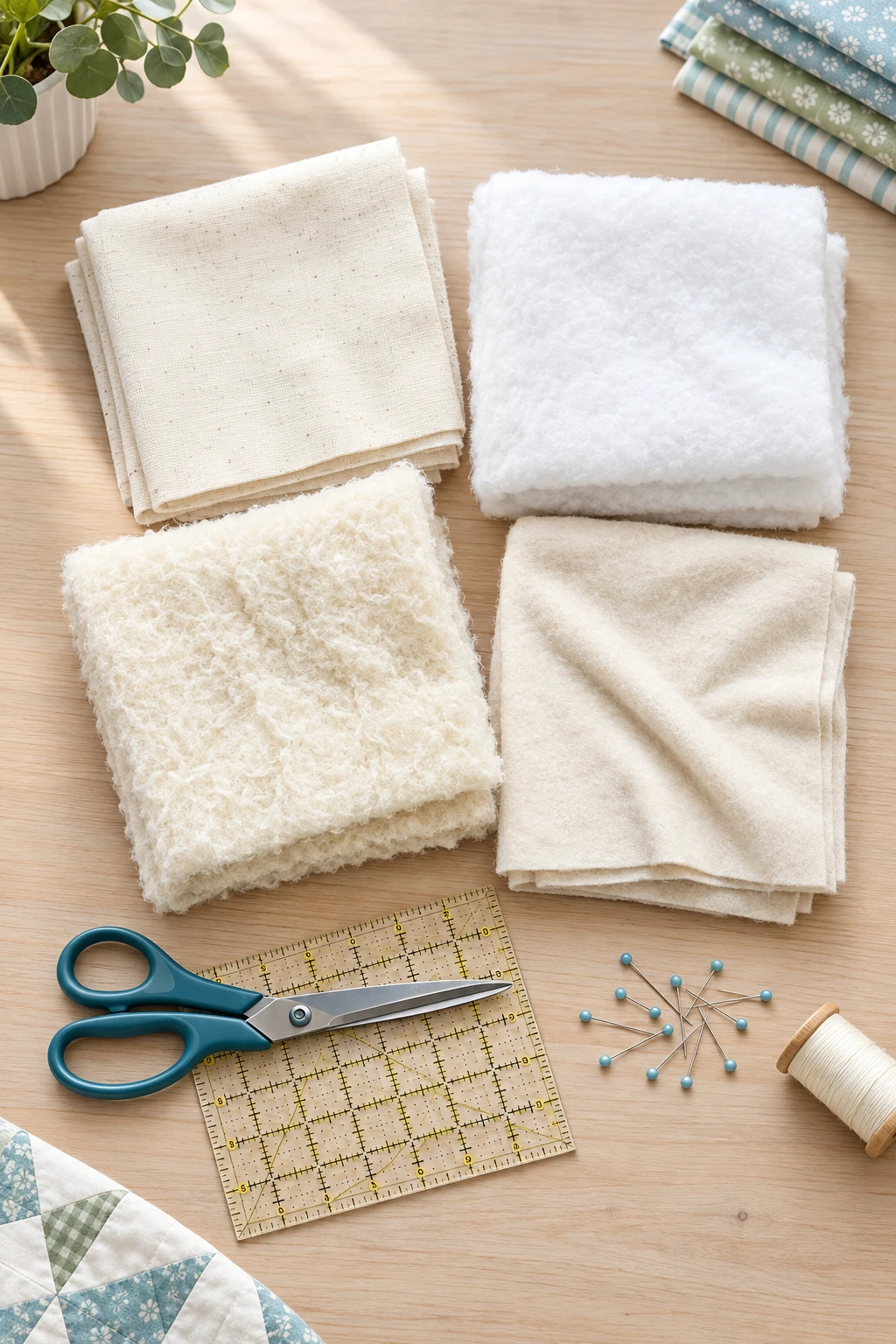
To choose batting for any quilt, start with how the quilt will be used. Pick a cotton blend for a couch quilt, 100% cotton (or bamboo) for a baby quilt, low-loft polyester for a wall hanging, and wool for a bed quilt. Then check loft, quilting distance, and washing instructions on the package before you buy.
What should the quilt be able to do before you pick a batting?
Decide the quilt’s job first. Why? Because batting is the one layer you can’t see it is the layer that cannot be changed once the quilt is bound. A quilt that lives on the couch needs to survive being dragged, sat on, and washed. A wall hanging needs to hang flat and stay that way.
Answer these four questions before you walk into the aisle:
- Will it be washed often? Baby quilts and couch quilts say yes. Wall hangings say never.
- Does it need to be warm, or just cozy? A bed quilt for a cold room has different needs than a throw for a sunny sofa.
- How will it be quilted? Dense machine quilting, wide-spaced lines, and hand quilting all treat batting differently.
- What look do you want? Puffy and cushy, or flat and drapey?
Your answers narrow a wall of options to two or three. If you are still deciding on the quilt itself, it helps to read the pattern with confidence first, since the pattern often tells you the finished size and the quilting style it expects.
What are the main batting fibers, and how do they differ?
There are four fibers you will see most often: cotton, polyester, wool, and blends. Each one behaves differently when you sew it, wash it, and sleep under it.
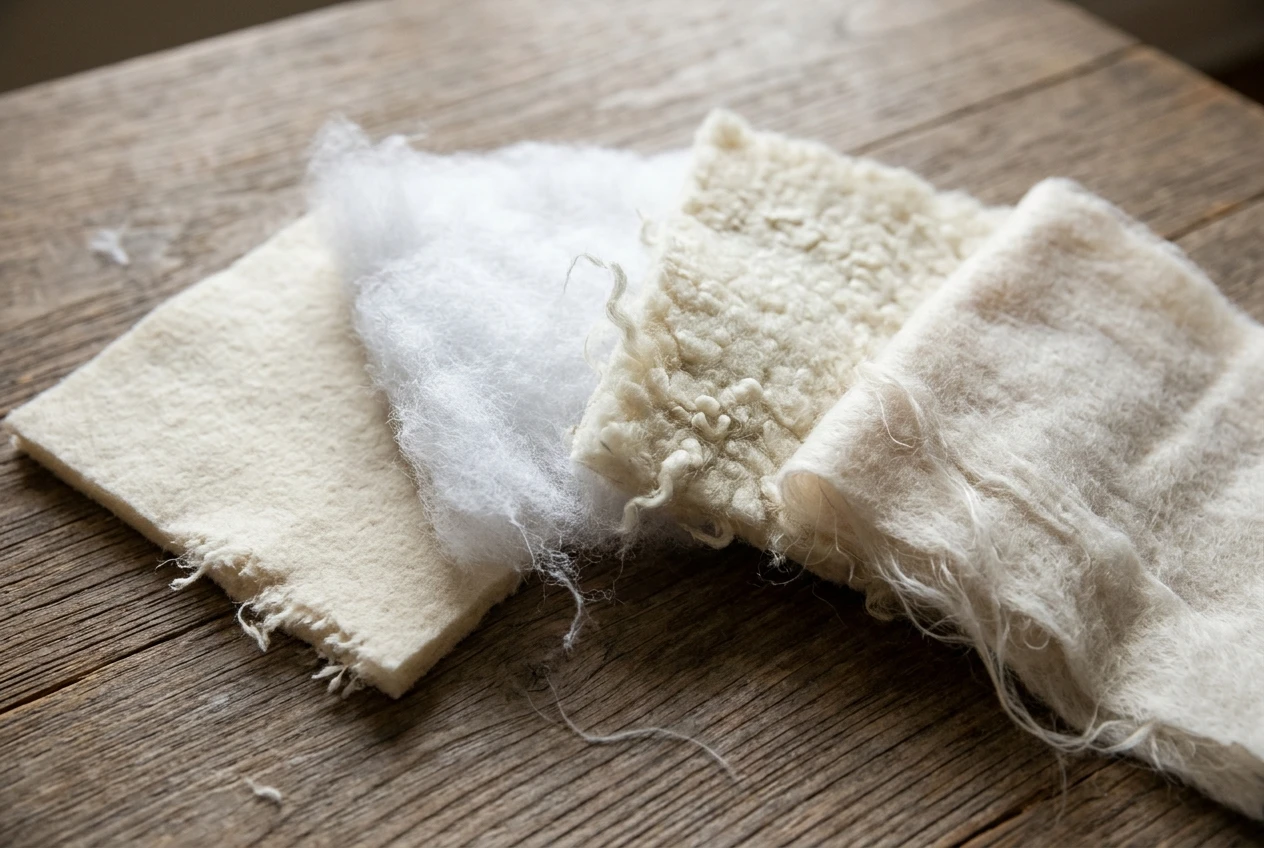
Cotton is soft, breathable, and drapey. It tends to cling to the fabric layers and lies flat. Many cotton battings need quilting lines fairly close together so the fiber doesn’t shift or clump inside the quilt. Some cotton battings shrink a little when washed, which gives the quilt that crinkly, antique look.
Polyester is light and springy, and it holds its loft. It doesn’t absorb moisture the way cotton does, and it doesn’t shrink. Its weak spot is bearding, where small fibers work their way through the quilt top and show up as fuzz, most visibly on dark fabric. Needle-punched or bonded polyester resists this better than loose, unbonded fill.
Wool is warm without being heavy, and it springs back after being squashed. It is a pleasure to quilt by hand and machine because the needle slides through it. Wool needs more careful washing than other fibers, so read the package.
Blends, most commonly cotton mixed with polyester, aim to give you some of each fiber’s strengths. A cotton blend has the soft feel of cotton with extra stability and resilience from the polyester.
Bamboo, typically bamboo blend, are becoming more popular for quilt batting. They are soft with good drape, and the preferred choice in warmer climates.
Which batting works best for each kind of quilt?
Match the batting to the quilt’s job, and the decision gets much easier. This table gives one pick for each situation, followed by the reasoning.
| Quilt | Best Pick | Why it Works |
| Daily-use couch quilt | Cotton/polyester blend, low to medium loft | Takes repeated washing and heavy use, stays stable, and still feels soft |
| Baby quilt | 100% cotton, low loft Breathable, soft, and lies flat | Washed often so it is easy to wash and handle |
| Wall hanging | Low-loft needle-punched polyester | Holds its shape, hangs flat, and doesn’t sag |
| Bed quilt | Wool, low to medium loft | Warm without weight, and drapes well over a mattress; Best for Hand quilting |
A note regarding quilting on a domestic or long arm machine: A cotton/polyester blend is used most often. It is stable, forgiving, and equally handles dense or loose quilting
Couch quilt
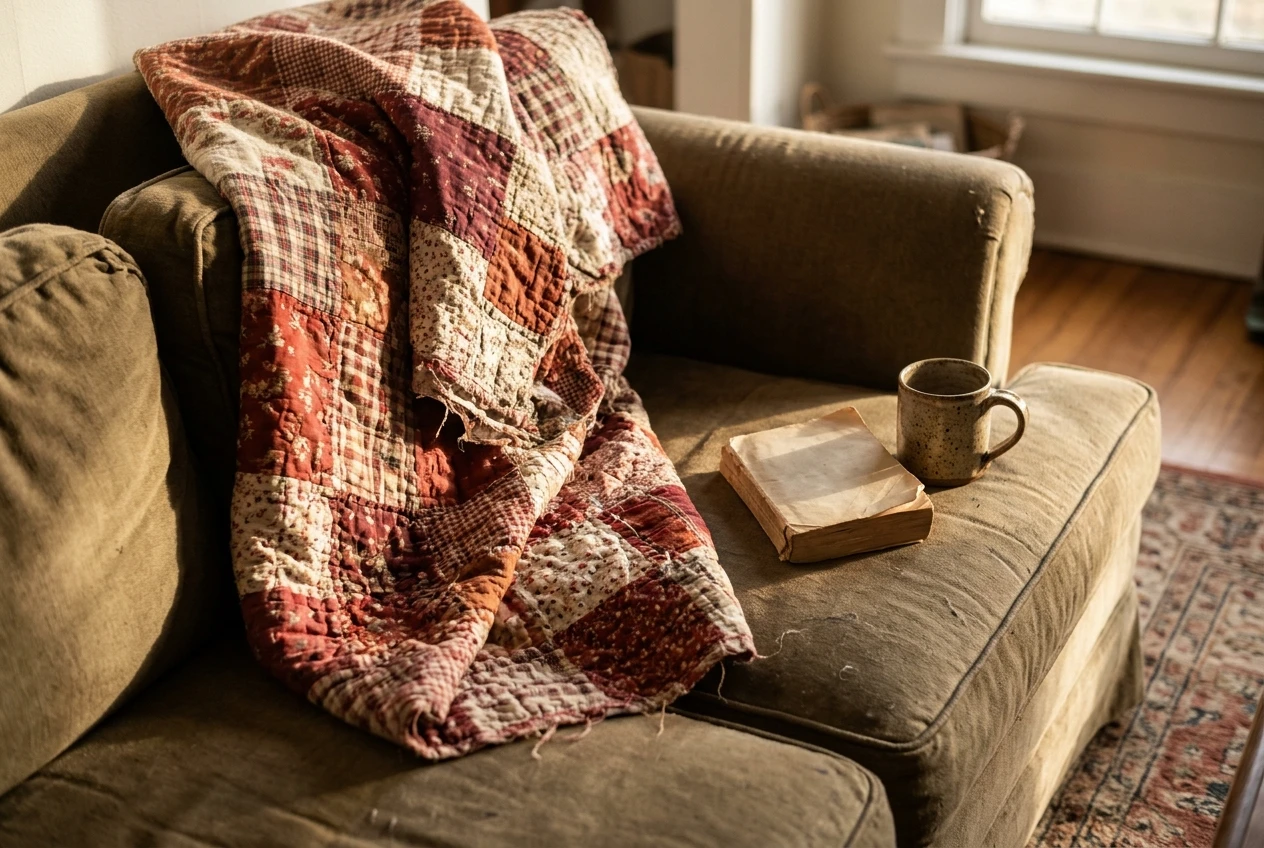
A couch quilt takes more abuse than any other quilt in the house. It gets sat on, tugged, spilled on, and tossed in the washer. A cotton blend gives you a soft quilt that keeps its structure through all of that.
Baby quilt
Baby quilts get washed far more than most people expect. A low-loft 100% cotton batting washes easily, feels soft, and is breathable. Keep the loft low so the quilt is not bulky for small hands to manage.
Wall hanging
Cushy batting is a liability on a wall. Low-loft needle-punched polyester stays flat and stable, and it doesn’t stretch or sag over time. Because a wall hanging is rarely washed, polyester’s lack of shrinkage works in your favor.
Bed quilt
Wool earns its place on a bed. It provides warmth without the weight of a thick poly batting and drapes nicely over the edges. If the bed quilt will be machine washed frequently and you would rather not fuss over care instructions, a cotton blend is the sensible alternative.
Does hand quilting or machine quilting change the choice?
Yes, because the needle has to travel through the batting thousands of times. Hand quilting asks the most of the batting. Machine quilting is more forgiving.
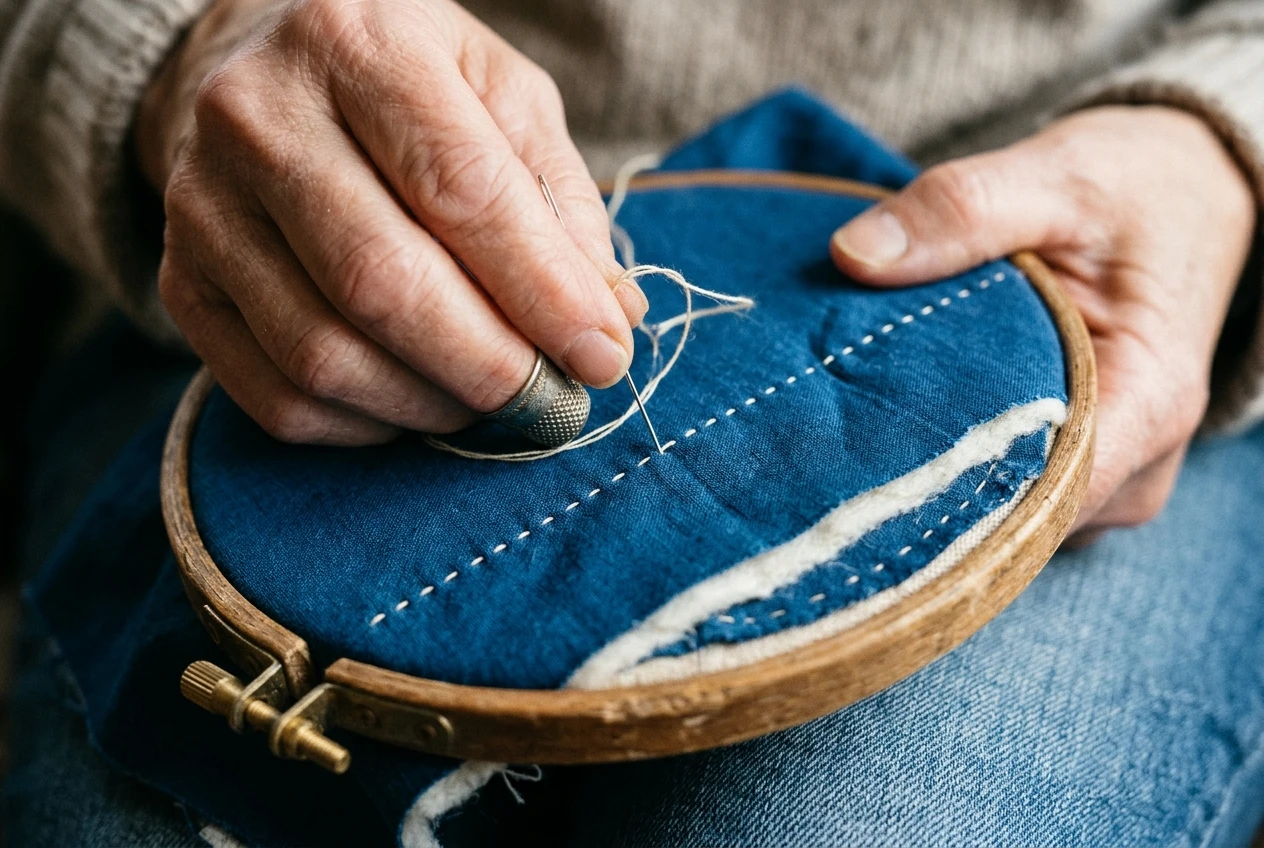
For hand quilting, you want batting that your needle glides through. Low-loft cotton without a scrim (a thin stabilizing layer in some needle-punched battings) is the easiest to work. Wool is also excellent if you prefer it. Heavily bonded battings and anything with a scrim can make each stitch a small wrestling match, and your wrist will notice by the third block.
For machine quilting, a cotton blend is dependable. It feeds smoothly under the presser foot and doesn’t shift much between the layers. High-loft batting is harder to maneuver on a home sewing machine because the quilt becomes bulky in the throat space. If you are free-motion quilting, a thinner batting makes it easier to move the quilt around.
What do loft, drape, and quilting distance mean for your project?
These three terms show up on every batting package, and they decide how the finished quilt looks and feels.
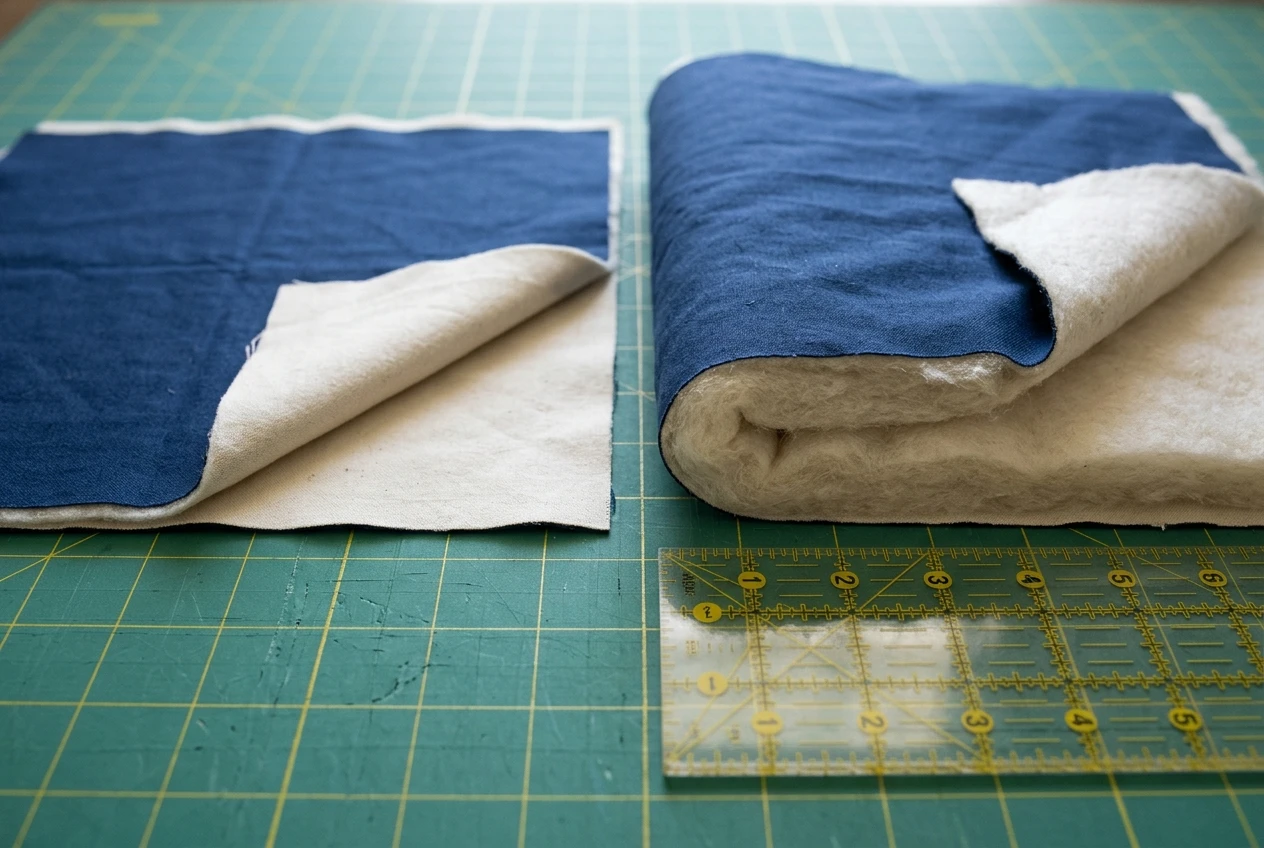
Loft is the thickness of the batting. Low loft is thin and flat. High loft is thick and puffy. Low loft is easier to quilt, shows off stitching detail, and makes a quilt that folds and washes easily. High loft gives you a plush, puffy look but is harder to handle on a home machine and can make a quilt feel stiff.
Drape is how well the finished quilt hangs and flows. Cotton and wool usually drape well. A high-loft polyester can feel stiff, and that matters on a bed quilt, which should fall softly over the sides. It matters much less on a wall hanging.
Quilting distance is the maximum space allowed between lines of quilting before the batting starts to shift, bunch, or separate. Every batting package states this. Some cotton battings need quilting every few inches. Needle-punched or bonded battings and wool can often go further between lines. If you plan to quilt sparsely, such as simple straight lines far apart or tying, check this number first. It’s the detail most often missed, and it causes a lot of lumpy quilts.
Do you need to pre-wash batting, and what about shrinkage?
It depends on the batting, so read the package. Many manufacturers design their cotton battings to be used straight from the package, and the shrinkage happens when you wash the finished quilt. That is how you get the soft, slightly crinkled look people associate with traditional quilts.
Some cotton and wool battings come with specific prewashing instructions, and they are worth following exactly. A batting that is washed the wrong way can come apart or shrink unevenly. Polyester doesn’t shrink and doesn’t need to be prewashed.
Think about your fabric too. If you prewashed your quilt top fabrics and then use a batting that shrinks, the quilt may pucker slightly after its first wash. If you did not prewash your fabrics, the shrinkage tends to be more even across the layers. Neither is wrong. Know which result you want and plan for it.
One easy habit: take the batting out of its packaging a day before you plan to baste. Unfolding it and letting it rest on a bed or table relaxes the fold lines, so you aren’t fighting creases when you layer the quilt.
What batting mistakes cause the most frustration, and how do you avoid them?
Most batting problems come from skipping the package label or from choosing for the wrong job. These are the common ones.
- Choosing by loft alone. A thick, puffy batting looks lovely on the shelf, but it is harder to quilt and can make a small project awkward. Choose the loft that suits the quilt’s purpose, not the one that looks most impressive.
- Ignoring the quilting distance. If your quilting lines are farther apart than the package allows, the batting can shift and bunch after a few washes. This happens most often on tied quilts and on quilts with sparse straight-line quilting.
- Using unbonded polyester with dark fabric. Bearding shows up most on dark colors. If your quilt has navy, black, or deep red fabrics, choose a needle-punched or bonded batting.
- Using scrimmed batting for hand quilting. The scrim makes hand stitching harder. Choose a batting without it and save your hands for the quilting itself.
- Skipping the care instructions. Wool and some cotton battings have particular washing requirements. A quick read before you buy saves you from a surprise in the laundry.
- Buying too little. Batting should be larger than the quilt top, with a few extra inches on every side. This gives you room for the shifting that happens during quilting. Cut it too close and you may end up with a quilt top that goes past the batting at one edge.
- Buying the same batting for every project. A batting that is ideal for a bed quilt can be a poor fit for a wall hanging. Choosing each time takes a few minutes, and it avoids hours of frustration.
If you are building up your supplies and want to see what else belongs in your sewing room, the guide to the essential quilting toolkit covers the basics that make every project easier.
Refer to the table above as needed or, download my FREE, Quick Guide to Quilt Batting below. There is enough confusion in life – the batting aisle doesn’t need to be one!