You already know the basics of what a rotary cutter does and why you need a walking foot eventually. What you need now is simpler: a list you can hold in your hand at the fabric store, or keep open in a tab while you shop online, that tells you exactly what to put in the cart this week and what to leave for later.
This is that list. No explanations of how each tool works, no debate about brands. Just what to buy, in what order, and roughly what it costs.
How This List Is Organized (and Why You Don’t Need Everything at Once)
Quilting shops are full of tools that look essential and aren’t, at least not on day one. Buying everything at once is how a beginner ends up with a drawer of gadgets that never get used and a first block that still isn’t finished.
This list is split into three tiers. Tier One gets you through your first block. Tier Two is for once you know you’re sticking with this. Tier Three is for things you can borrow, wait on, or skip entirely until a specific project calls for them. Shop in that order and your first trip stays short, affordable, and focused.
Tier One: What to Buy Before Your First Block
This is the cart for your first trip. Everything here earns its place in your very first project.
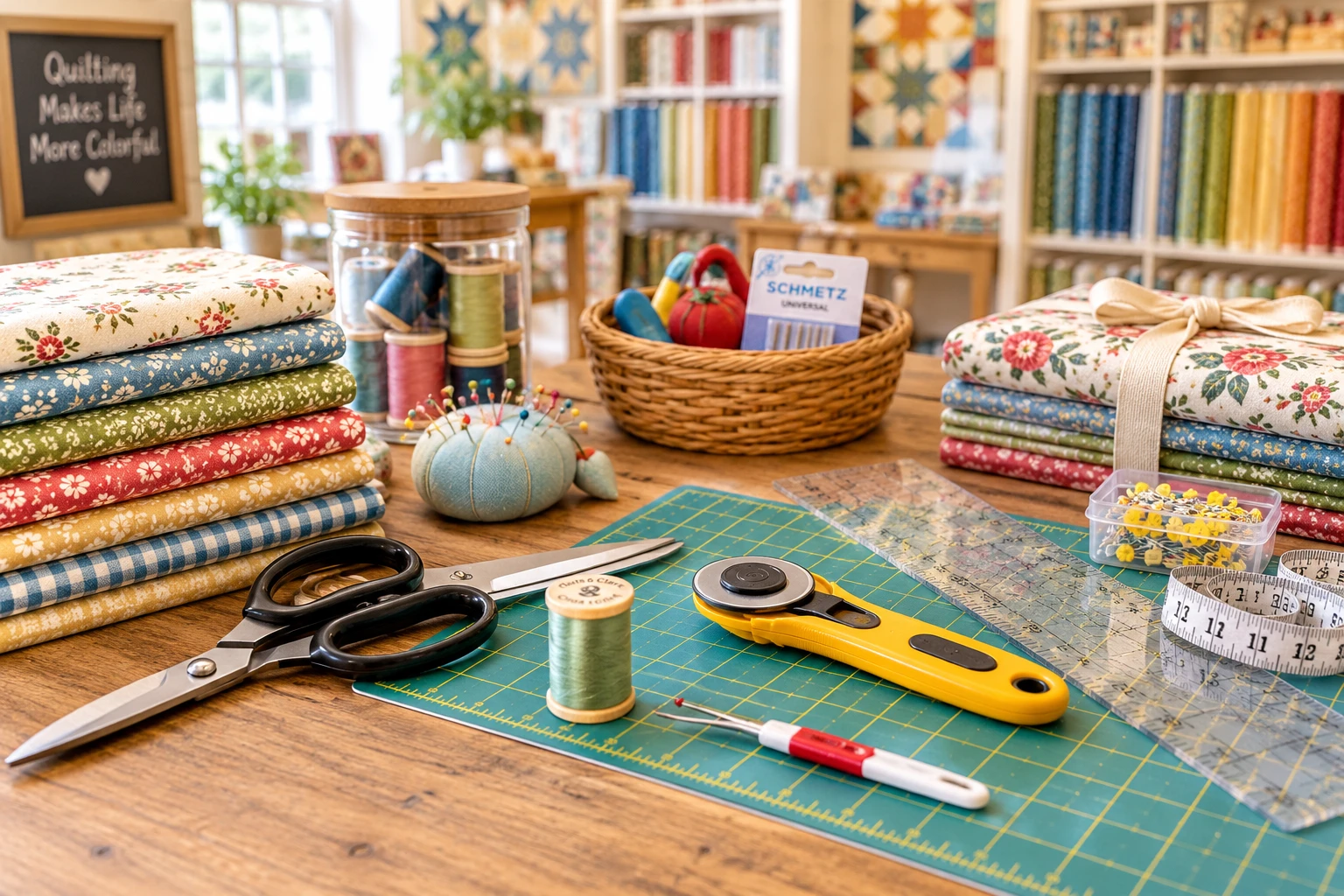
- Rotary cutter, 45mm
- Scissors, 6″ or 8″ all purpose for fabric
- Self-healing cutting mat, at least 18×24 inches
- Clear acrylic ruler, 6×24 inches
- Cotton quilting fabric for your chosen block
- Cotton or cotton-blend thread in a neutral color
- Straight pins and a pincushion
- Hand sewing needles, for basting or finishing
- Seam ripper
- A quarter-inch foot for your sewing machine, if it didn’t come with one
That’s the full list for your first block. If your budget is tight, the ruler, cutting mat, and rotary cutter are the three items worth paying full price for. Everything else has a cheaper substitute you can upgrade later. For a closer look at why these specific tools matter and how to choose between options, the quilting tools for beginners guide walks through the reasoning in more detail.
Tier Two: Add These Once You’re Hooked
Once you’ve finished a block or two and you know this is sticking, these are the next purchases worth making. None of them are urgent for project one, but they make project two and three noticeably smoother.
- Spray starch or starch alternative, for crisper piecing
- A second, smaller acrylic ruler (5″ square) for trimming half-square triangles and smaller units
- An iron dedicated to your sewing space, or at least a reliable press nearby
- A design wall or a piece of flannel-backed tablecloth to pin blocks up and audit layout
- Walking foot for straight-line quilting
- A basic color wheel or swatch ring, if you’re starting to choose your own fabric pairings instead of following a kit
- Thread snips, separate from your fabric scissors
This is also the point where it’s worth thinking about how you choose fabric rather than just what you buy. If color selection has you second-guessing every pairing, the guide on choosing fabric with confidence is worth a read before your next trip.
Tier Three: Borrow, Wait, or Skip for Now
These show up in almost every “what quilters use” list online, and almost none of them matter for a beginner’s first few projects. Some are worth borrowing before you buy. Others are worth skipping until a specific pattern requires them.
- Specialty rulers for curved piecing or specific block shapes, buy only when a pattern calls for that exact shape
- Long-arm or mid-arm quilting machine access, borrow or rent through a local shop before buying anything
- Fusible web and applique-specific tools, wait until you’re drawn to an applique project specifically
- A dedicated design software subscription, unnecessary until you’re drafting your own patterns
- Multiple thread weights and specialty threads, a single reliable neutral is enough for now
- A large stash of fat quarters “just in case,” buy fabric for the project in front of you
None of these are wasted money forever. They’re just premature money right now. A new quilter who skips this tier entirely will not notice anything missing from their first five projects.
Fabric Store, Big Box, or Online: Where Each Tier Makes Sense
Tier One is worth buying in person if you can, at least the first time. Handling a rotary cutter and feeling the weight of a ruler before you buy it helps you choose sizes and grips that actually suit your hands. A local quilt shop will also cut fabric to the exact yardage your pattern calls for, which saves guesswork.
Tier Two items: The days of being able to walk into a Big Box craft store, (especially when a coupon is running) for items like starch, snips, and basic rulers are sadly over. As when purchasing a sewing machine, specialty items like a walking foot are worth buying from a dealer who carries your specific sewing machine brand. Not every foot fits every machine.
Tier Three is where online shopping makes the most sense, because by the time you need any of it, you’ll know exactly which pattern or project is asking for it. Buying specialty rulers or applique tools ahead of a specific need almost always means buying the wrong size or style.
What to Expect to Spend at Each Tier
Costs vary by brand and region, but the general shape holds steady. Tier One, bought as a full starter set, typically costs more than any later tier because it includes the one-time purchases: the cutter, the mat, and the ruler. After that first trip, fabric becomes your main recurring cost, not tools.
Tier Two additions are smaller individual purchases spread out over a few months, as you pick them up when a project calls for them rather than all at once. Tier Three, if you ever need it, tends to be the most expensive per item but also the rarest purchase, since most of it only gets bought once you’ve chosen a specialty direction like applique or free-motion quilting.
The pattern across all three tiers: front-load the tools that touch every project and let the specialty purchases wait until a specific project asks for them by name.
Grab the Printable Version for Your Next Shopping Trip
This free printable PDF checklist is the perfect size to slip into your purse or tape inside a cabinet door – any place visible to help you stay on track with your new purchases.